Two Churches, Two Souls of the City
In the heart of Milan stand two of the city’s oldest and most significant churches: the Basilica of San Lorenzo Maggiore and the Basilica of Sant’Ambrogio. Visiting these places is not only a journey into history, but also a way to connect with a quieter, more spiritual, and more authentic side of the city. Those studying Italian in Milan soon discover that to truly understand the language, one must also listen to the places that speak in a whisper—and these basilicas do so, powerfully.
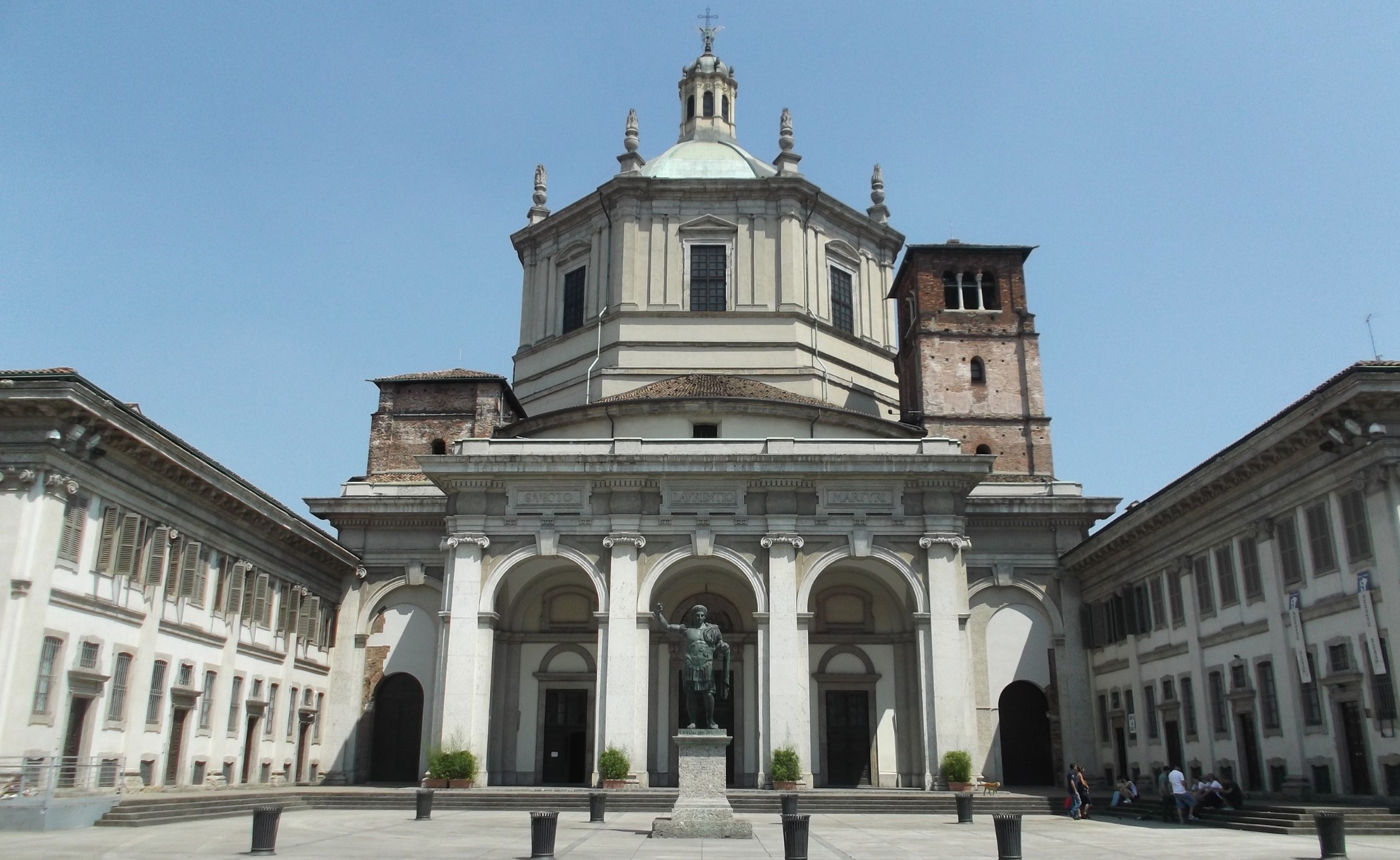
San Lorenzo is located just a short walk from the Roman columns bearing the same name, in a square frequented by young people, tourists, and families. The church, with its imposing forms and intimate atmosphere, traces its origins back to the early centuries of Christianity. Its central plan and large apse hint at the importance it has held for centuries. Sant’Ambrogio, on the other hand, is the basilica dedicated to the city’s patron saint: a place deeply tied to Milanese identity. Its Romanesque architecture, the entrance portico, the two asymmetrical towers, the ancient floor… everything speaks to a Milan that is deep-rooted and authentic, one that goes beyond modernity and design.
Italian: The Language of Emotions and Memory
Visiting these basilicas can be a very personal experience for those studying Italian. There’s more than just art to observe: there are ancient texts to read, commemorative plaques, written prayers, and quotes from saints and thinkers. It’s a different kind of language—slower, more reflective—that helps you slow down and listen. Even the way people behave in these places—the whispered words, the gestures, the silence—is a form of communication that enriches the linguistic experience.
Sant’Ambrogio also houses a crypt where you can see the saint’s relics alongside those of Saint Gervasius and Saint Protasius. It’s an evocative setting, and walking through the naves—perhaps listening to a guide or reading a brochure in Italian—can turn into an intense and engaging lesson. San Lorenzo, on the other hand, is striking for its dome and the Chapel of Saint Aquilinus, with its early Christian mosaics and inscriptions in Latin and Italian. These elements, too, spark curiosity and offer insights for those who want to go beyond standard school vocabulary.
A unique setting for honing your observational skills and language skills
The basilicas of San Lorenzo and Sant’Ambrogio are not isolated. Around them lie vibrant urban settings. Piazza delle Colonne is a meeting place for different cultures and generations—the perfect spot to observe the city in action, listen to different accents, and read signs or flyers. The area around Sant’Ambrogio, on the other hand, is very popular with college students and hosts cultural events and concerts. It’s easy to find bulletin boards with announcements, exhibitions, and gatherings—opportunities to read, talk, and understand.
Those studying Italian can take advantage of these neighborhoods to practice using the language in informal, everyday situations. Asking for directions, stepping into a bookstore, ordering something at a café, reading an event flyer… all of this helps train your ear and enrich your vocabulary. At the same time, the constant presence of historical, artistic, and spiritual elements creates an atmosphere that leaves a lasting impression. In these churches, you don’t just learn the Italian language. You also learn to feel the city.